
Fall Prevention Equipment for Care Homes To Improve Safety
Fall Prevention & Equipment Safety: Procurement Considerations
Fall prevention is one of the most important priorities in modern care environments. It directly impacts resident safety, staff confidence, regulatory compliance and overall operational costs. For procurement teams, this is no longer just a clinical concern. It is a strategic responsibility that requires careful planning, informed decision making and the right supplier support.
Selecting appropriate fall prevention equipment for your care home plays a central role in reducing incidents and improving care quality. From everyday care home safety products to specialist safe lifting devices, every purchasing decision contributes to a safer and more controlled environment.
This guide explains how procurement teams can approach fall prevention through smarter equipment selection, structured planning and effective risk-reduction care homes strategies.
Why Fall Prevention Is a Critical Procurement Responsibility
Falls are one of the most common causes of injury in care homes, often leading to serious health complications and increased care requirements. For care providers, this creates both clinical and financial challenges.
Procurement teams play a key role in reducing these risks by ensuring that the right fall prevention equipment is in place. Poor equipment choices can increase incidents, create inconsistency in care delivery and lead to higher long-term costs.
By prioritising high-quality care home safety products and reliable safe-lifting devices, procurement teams can support safer environments while strengthening compliance and operational efficiency. A proactive approach to risk-reduction care homes strategies helps prevent issues before they occur, rather than reacting to incidents after the fact.
Understanding Risk Factors in Care Home Environments
Effective fall prevention begins with understanding the risks present within care settings. These risks often vary depending on resident needs, building layout and staff practices.
Common factors include:
- Reduced mobility
- Cognitive impairment
- Environmental hazards
- Use of unsuitable or inconsistent equipment
Without the right care home fall prevention equipment, these risks can quickly escalate.
A structured approach to risk-reduction care home planning involves identifying these challenges and selecting care home safety products that directly address them. This includes ensuring that safe lifting devices are appropriate for both resident needs and staff usage, helping to reduce strain, improve handling and prevent accidents.
Key Procurement Considerations for Equipment Safety
Choosing the right equipment requires more than simply selecting products. Procurement teams must evaluate how each solution contributes to safety, compliance and long-term value.
Clinical Suitability and Resident Needs
Equipment must match the specific needs of residents, ensuring that the fall prevention equipment you have in your care home is appropriate for different mobility levels and care requirements.
Compliance and Certification
All care home safety products should meet relevant safety standards and regulatory expectations. Proper documentation and certification support audit readiness and reduce compliance risk.
Durability and Lifecycle Value
High-quality equipment provides better long-term value by reducing replacement frequency and maintenance costs. This is especially important for frequently used safe-lifting devices.
Ease of Use and Staff Training
Equipment should be simple and intuitive to use. This improves staff confidence and reduces the likelihood of misuse, which is essential for effective care homes strategies involving risk reduction.
Consistency Across Multiple Sites
Standardising fall prevention equipment for care homes ensures consistent care delivery, simplifies training and improves operational efficiency across all locations.
Maintenance and Ongoing Support
Reliable servicing and support ensure that care home safety products remain safe and effective over time, reducing the risk of equipment failure.
A supplier that supports all these areas helps procurement teams make safer and more informed decisions.
Types of Fall Prevention Equipment for Care Homes
A comprehensive fall prevention strategy requires a combination of equipment types, each designed to address specific risks within the care environment.
Mobility Support Equipment
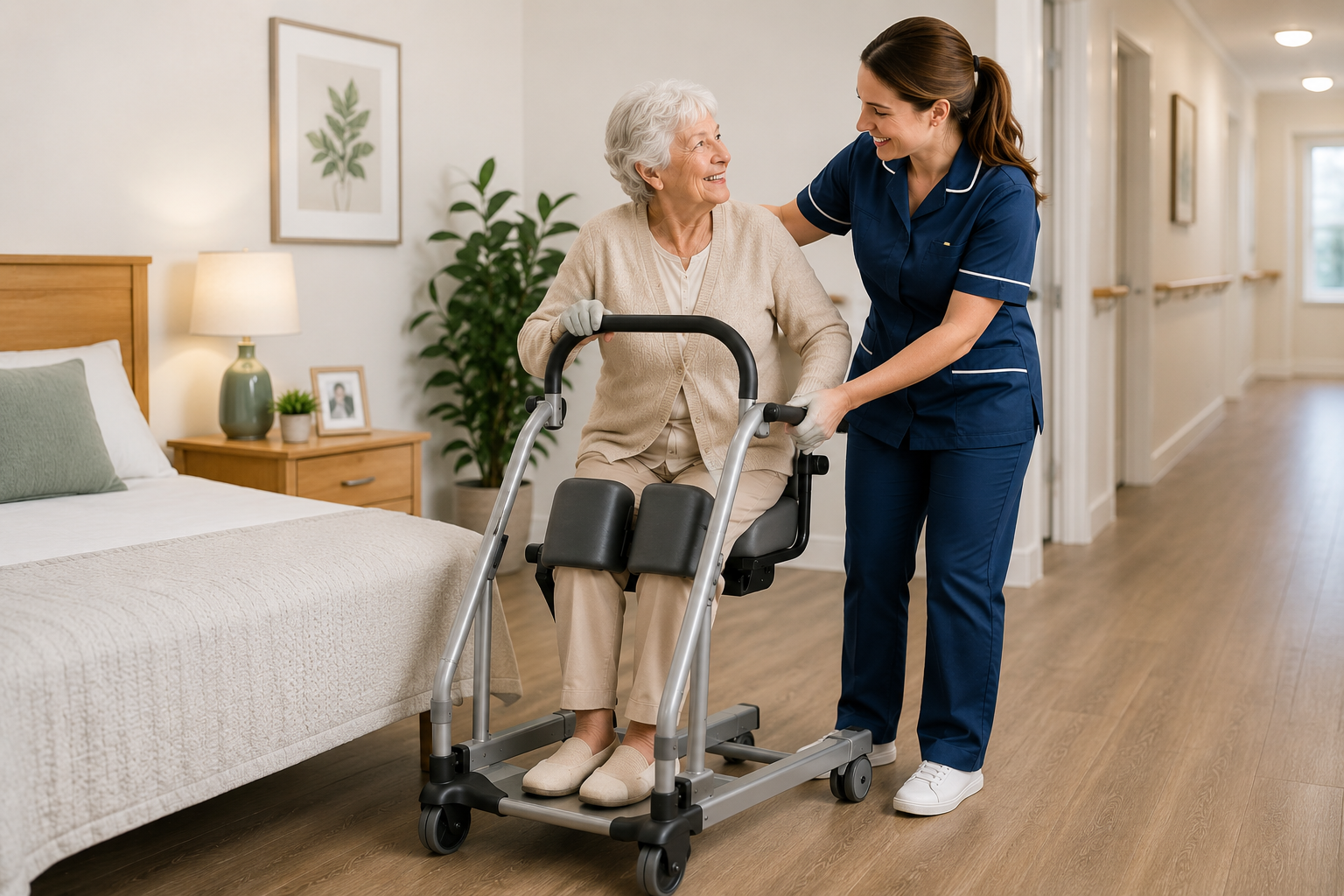
Mobility aids such as walking frames, transfer aids and positioning tools are essential care home safety products that support independence and reduce the risk of falls.
Safe Lifting Devices
Safe lifting devices such as hoists, stand aids and slings are critical for safe resident handling. They reduce physical strain on staff while ensuring residents are moved safely and comfortably.
Environmental Safety Solutions
Environmental care home safety products include handrails, bed and chair sensors and non-slip surfaces. These solutions help create a safer physical environment and reduce hazards.
Selecting the right mix of care home fall prevention equipment ensures a balanced and effective approach to safety, supporting both residents and care teams.
The Role of Audits and Planning in Fall Prevention
Effective fall prevention requires ongoing assessment and proactive planning. Procurement teams should work closely with care providers to implement regular equipment audits and structured review processes.
Audits help identify gaps in current equipment, highlight inconsistencies across sites, and ensure that all care home safety products remain suitable for their intended use. They also support better tracking of safe lifting devices and other high-value equipment.
Planning ahead allows care homes to adopt a preventative approach, aligning procurement decisions with long-term risk-reduction care homes strategies. This not only improves safety outcomes but also enhances compliance and operational control.
Challenges in Managing Fall Prevention Across Multiple Sites
Managing fall prevention across multiple care homes becomes increasingly complex for multi-site providers. Without central control, equipment choices often differ from one location to another, leading to inconsistent standards, reduced efficiency and higher operational risk.
- Variation in fall prevention equipment for care homes across different locations creates inconsistency in care delivery
- Lack of central oversight leads to duplication of care home safety products and unnecessary additional costs
- Inconsistent use of safe lifting devices increases the risk of handling errors and resident safety incidents
- Reduced visibility over equipment usage makes it harder to track performance and manage compliance effectively
- Increased staff training requirements due to different equipment types across sites
- Difficulty maintaining consistent risk-reduction strategies for care homes without standardised procurement processes
- Higher chance of inefficiencies and budget waste due to uncoordinated purchasing decisions across multiple sites
A centralised procurement approach helps resolve these challenges by standardising equipment selection, improving visibility and control and ensuring consistent risk-reduction strategies are applied across all locations.
How Berwick Care Supports Safer Procurement Decisions
Berwick Care works closely with procurement teams to support safer, more effective equipment strategies. As a trusted partner, they go beyond supply to provide guidance, planning and ongoing support.
With extensive experience in sourcing fall prevention equipment for care homes across the UK, Berwick Care helps organisations select the right safety products based on clinical needs and operational requirements. Their expertise in safe lifting devices ensures that care providers have access to reliable and compliant solutions.
Berwick Care also supports structured procurement processes, helping care homes improve consistency, maintain compliance and implement effective risk-reduction care homes strategies. From initial consultation to ongoing support, their approach is focused on long-term value and safer care outcomes.
Final Thoughts
Fall prevention is a critical area where procurement decisions have a direct and lasting impact. By selecting the right fall prevention equipment for care homes and implementing structured planning processes, care providers can significantly reduce risk and improve safety.
Focusing on high-quality care home safety products, reliable safe lifting devices and proactive risk-reduction care homes strategies ensures better outcomes for residents and staff alike.
With the support of an experienced partner like Berwick Care, procurement teams can move beyond reactive purchasing and build a more controlled, efficient and safety focused approach to care equipment management.