
How to Coordinate Colours and Fabrics in Care Settings
How to Coordinate Colours and Fabrics in Care Settings
Creating a comfortable, safe and visually appealing environment is one of the most important considerations for care homes in the UK. Colour and fabric choices directly affect resident wellbeing, staff efficiency and the overall atmosphere of the facility. The right design decisions can enhance resident comfort, support cognitive health, and make daily care routines smoother for staff.
Many care homes are now turning to expert guidance from brands like Swan Hill Furniture, which offers pre-designed mood boards and solutions that combine aesthetics with functionality. By carefully coordinating care home colour schemes and fabric selections, facilities can create environments that are not only beautiful but also safe, calming and supportive for residents, including those living with dementia.
The Importance of Colour in Care Homes
Colour is more than a decorative choice in care settings, it has a profound psychological and emotional impact. In elderly care, colours can influence mood, orientation and even appetite. Certain shades can reduce agitation, support relaxation or stimulate engagement depending on the desired effect.
Key considerations for colour in care homes include:
-
Calming colours for elderly residents: Soft blues, greens and pastel shades create a soothing environment that reduces anxiety.
-
Dementia-friendly colours: High-contrast tones help residents distinguish between furniture, walls, and flooring, reducing confusion and fall risk.
-
Purpose-driven colour schemes: Lounges, dining areas and bedrooms may benefit from different palettes to support relaxation, social interaction or rest.
By carefully selecting colours based on resident needs, care homes can create an environment that feels welcoming, safe and engaging. For example, a lounge area might use warm, neutral tones with accent colours to encourage socialisation, while bedrooms may incorporate softer, calming shades for restful sleep.
Choosing Fabrics for Care Settings
Selecting the right fabrics is just as important as choosing colours in care environments. Fabrics not only influence the look and feel of a space but also play a vital role in resident comfort, hygiene and overall safety. In high-traffic care settings, materials must withstand regular use while supporting wellbeing and compliance with safety standards.
Durability
Care home fabrics must be robust enough to endure frequent use, daily cleaning and occasional spills without losing their appearance or structural integrity. Durable materials help maintain a professional and welcoming environment while reducing the need for frequent replacements.
Hygiene
Maintaining hygiene is essential in care homes. Fabrics should be easy to clean, resistant to bacteria, and able to withstand approved disinfectants. Choosing materials with these qualities supports infection control and ensures a safer environment for residents and staff.
Fire Safety
All fabrics used in care settings must comply with UK fire safety regulations. Fire-retardant materials help reduce risks in case of emergencies, providing both staff and residents with a safer living and working environment.
Texture and Sensory Comfort
Comfort goes beyond appearance. Soft, non-abrasive fabrics enhance tactile comfort, making seating and furnishings more inviting for residents. For residents with dementia, subtle patterns and textures can provide sensory engagement without causing overstimulation, helping to create a calming environment.
Combining Colours and Fabrics Effectively
Creating a harmonious care home environment requires more than selecting colours and fabrics independently; it is essential to combine them thoughtfully.
Tips for effective coordination include:
-
Contrast for safety: Using contrasting colours for furniture edges, handles or chairs helps residents with dementia identify objects easily.
-
Balanced palettes: Combine calming base colours with subtle accent shades to create visual interest without overstimulation.
-
Fabric patterns: Simple, consistent patterns are ideal for lounges and bedrooms, while bold patterns can be reserved for accent pieces to reduce visual confusion.
-
Consistency: Ensure that fabrics complement wall colours, flooring and furniture finishes to create a cohesive aesthetic throughout the care home.
Brands like Swan Hill Furniture often provide pre-designed mood boards to guide these decisions, enabling care homes to visualise colour and fabric combinations before purchasing, saving time and reducing costly mistakes.
Creating a Cohesive and Calming Environment
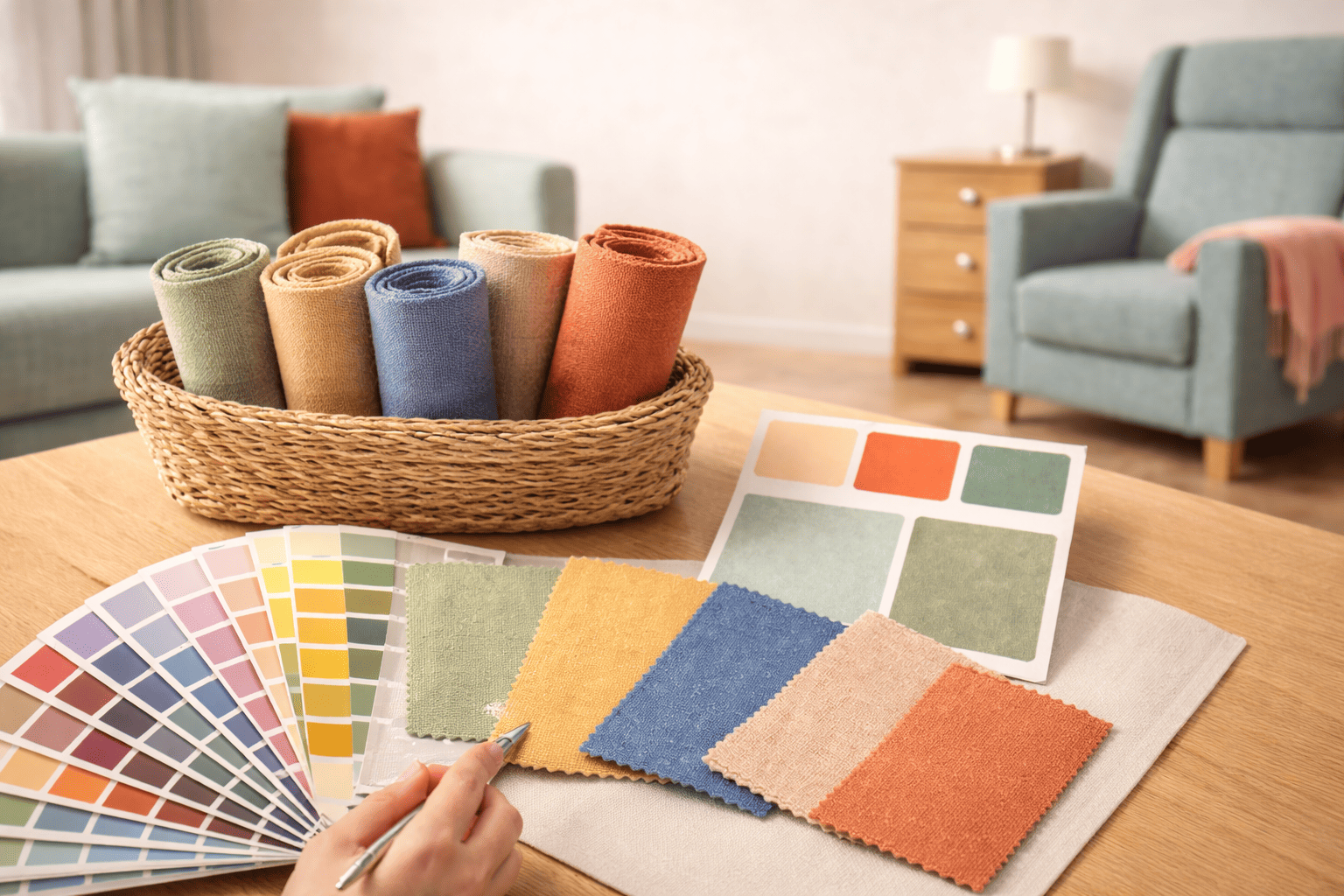
A thoughtfully coordinated care home environment benefits both residents and staff by combining visual harmony with functional design. Consistency in care home colour schemes and fabrics allows residents to navigate spaces more easily, creating a sense of familiarity and security.
Cohesive colour and fabric choices also encourage social interaction and engagement. Comfortable, visually appealing areas invite residents to spend time in communal spaces, while clear contrasts and coordinated designs provide intuitive cues that support independent movement.
Practical examples include bedrooms with soft green walls paired with matching upholstered chairs and neutral curtains, creating a calm and restful retreat. In lounges, warmer tones and complementary fabrics can foster social engagement and a welcoming atmosphere, balancing functionality with a homely, inviting feel rather than a clinical environment.
Practical Tips from Industry Experts
Designing care home interiors requires both creativity and practical knowledge to balance comfort, safety and aesthetics. Industry experts emphasise that thoughtful coordination of care home colour schemes and fabric choices can enhance resident wellbeing, support staff efficiency, and create a harmonious environment. Below are actionable tips presented in a clear, structured format:
|
Expert Tip |
Purpose & Benefit |
|
Use calming colours in rest areas |
Soft blues, greens and pastels promote relaxation and reduce anxiety for elderly residents |
|
Apply brighter accent colours in communal spaces |
Stimulates engagement and social interaction in lounges and activity rooms |
|
Select durable, easy-to-clean fabrics |
Maintains hygiene, reduces wear and tear and ensures long-lasting comfort in high-traffic areas |
|
Incorporate dementia-friendly colours in furniture and signage |
High-contrast tones support orientation and independence for residents with cognitive impairments |
|
Leverage pre-designed mood boards |
Helps visualise cohesive colour and fabric combinations, simplifying selection and ensuring consistency |
|
Evaluate lighting conditions |
Ensures colours are accurate and comfortable under both natural and artificial lighting, enhancing visibility and ambience |
Regulatory and Safety Considerations
Selecting colours and fabrics is not only an aesthetic decision but also a matter of compliance and safety. Care homes in the UK must adhere to fire safety, hygiene and accessibility standards.
Key considerations include:
-
Fabrics must be fire-retardant and meet UK safety standards.
-
Colours and patterns should support dementia-friendly design principles, aiding navigation and reducing fall risks.
-
Materials must be compatible with cleaning and infection control protocols, ensuring hygiene without compromising durability.
By choosing care home fabric choices and colours thoughtfully, care homes can meet regulations while enhancing the overall experience for residents.
Final Thoughts
Coordinating colours and fabrics in care settings is a complex but essential task. The right choices can enhance resident wellbeing, safety and comfort, while improving staff efficiency and creating a welcoming environment.
By leveraging expert guidance from suppliers like Swan Hill Furniture, care homes can use pre-designed mood boards, select dementia-friendly colours and choose calming colours for elderly residents to achieve cohesive, functional and aesthetically pleasing spaces. Thoughtful colour and fabric coordination is an investment in resident care, comfort and satisfaction.