
Designing Comfortable and Accessible Reception Areas for Care Facilities
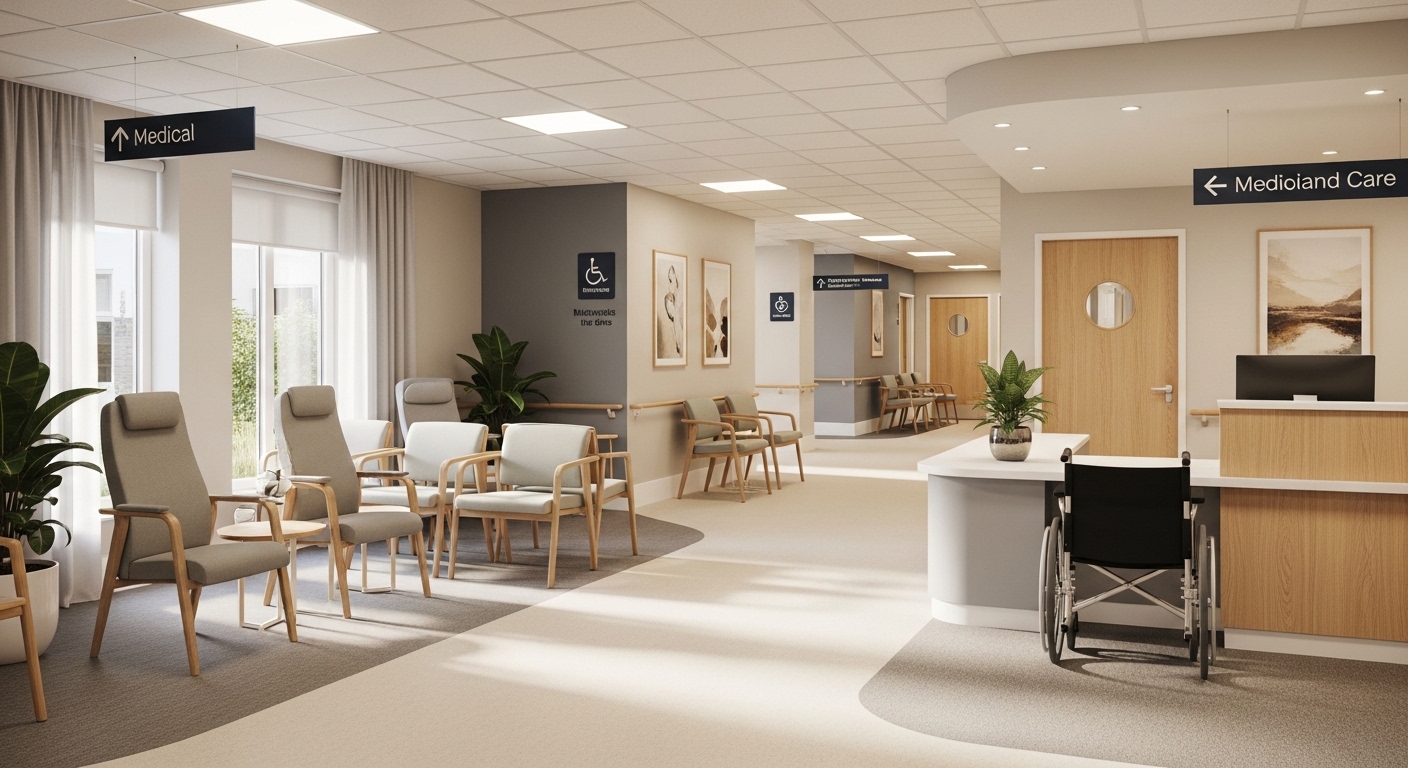
The reception area is the first space people encounter when they enter a care facility. It shapes immediate perceptions and sets expectations for the level of care, professionalism and comfort residents and visitors can expect. A well-designed reception greets guests and reassures families and creates a calm and respectful environment for residents.
Designing a welcoming reception area in a care facility requires thoughtful planning. Every detail, from furniture and lighting to layout and signage, contributes to the overall experience. When done correctly, this space becomes a bridge between the outside world and the supportive environment within the care home.
Why the Reception Area Matters in a Care Facility
The reception area plays a critical role in shaping trust and confidence. For many families, visiting a care facility can be an emotional experience. A welcoming and well-organised reception immediately provides reassurance and a sense of professionalism.
This space also functions as a central communication point. Staff use it to welcome visitors, provide information and coordinate daily operations. A poorly designed reception can lead to confusion, delays and unnecessary stress for both staff and visitors.
From a practical perspective, the reception area sets the tone for the entire facility. A calm, clean and thoughtfully designed entrance reflects a high standard of care and attention to detail.
Designing for Comfort and Accessibility
A well-designed reception area in a care facility must prioritise both comfort and accessibility to meet the diverse needs of visitors and residents. From mobility support to spatial clarity, every element should work together to create an environment that feels safe, easy to navigate and reassuring from the moment someone enters.
- Ensure barrier-free movement: Layouts should allow smooth navigation for wheelchairs, walking aids, and individuals with limited mobility, with wide, unobstructed pathways.
- Focus on supportive seating: Chairs with armrests, appropriate height and firm cushioning make it easier for elderly visitors to sit and stand comfortably.
The reception desk should also be designed with accessibility in mind. A lowered section allows wheelchair users to interact comfortably with staff, while open sightlines across the space help visitors quickly understand where to go. Beyond physical design, factors such as temperature, acoustics and spatial flow all contribute to a more relaxed and welcoming experience.
Creating a Warm and Inviting Atmosphere
The atmosphere of a reception area has a direct impact on how visitors feel when they arrive. In care settings, it is important to move away from clinical aesthetics and instead create a space that feels calm, familiar and reassuring.
- Use calming colour palettes: Soft neutrals paired with warm tones help create a relaxed and homely environment.
- Incorporate natural elements: Materials such as wood finishes, indoor plants, and textured fabrics soften the space and add warmth.
- Add personal and local touches: Artwork, photographs, or community-inspired décor create a sense of identity and belonging.
- Maximise natural light: Daylight enhances mood and makes the space feel more open and inviting, while warm artificial lighting can replicate this effect when needed.
A thoughtfully curated atmosphere not only improves visual appeal but also supports emotional comfort for both residents and visitors.
Furniture Selection for Reception Areas
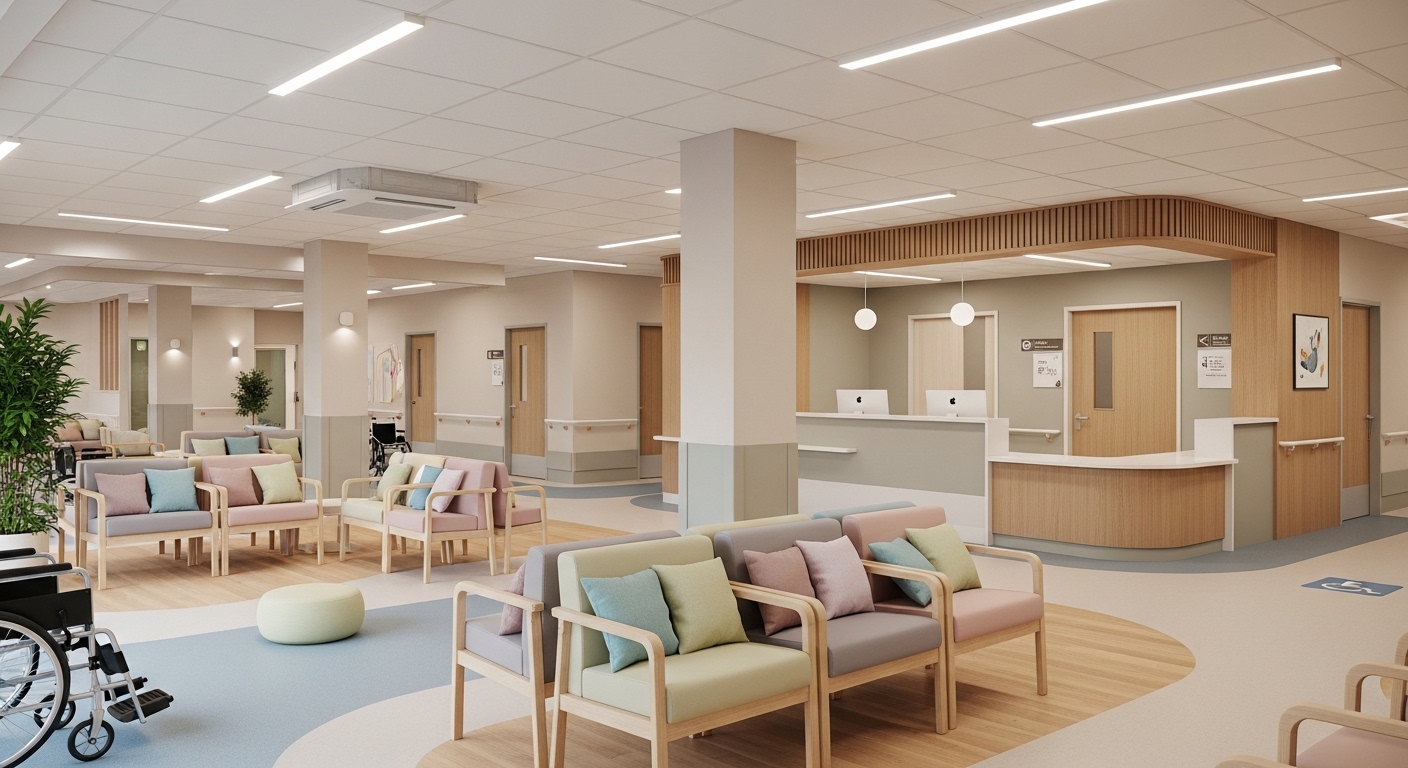
Furniture plays a central role in defining both the functionality and appearance of a care facility reception area. The right choices ensure long-term durability while maintaining a welcoming and comfortable feel.
- Choose durable, care-ready materials: Furniture should withstand frequent use and regular cleaning without losing its quality or appearance.
- Prioritise comfort with support: Seating should offer ergonomic support while remaining soft and inviting for extended use.
- Create flexible seating arrangements: Small groupings encourage conversation while allowing personal space when needed.
- Design an efficient reception desk: The desk should provide adequate workspace for staff while remaining open and approachable to visitors.
- Maintain a cohesive visual style: Coordinated colours and materials help unify the space and enhance overall aesthetics.
Thoughtful furniture selection ensures that the reception area remains practical, visually appealing and aligned with the overall design of the care facility.
Lighting and Ambience
Lighting is a key factor in shaping how a reception area is experienced. A well-lit space feels safer, more comfortable and more welcoming, while poor lighting can create discomfort or confusion.
A balanced lighting strategy works best. Ambient lighting provides general brightness, while task lighting supports staff activities at the reception desk. Accent lighting can highlight specific design elements and add depth to the space.
It is important to minimise glare, particularly for older visitors who may have visual sensitivities. Evenly distributed lighting reduces harsh shadows and improves visibility, making it easier and safer to move around. When carefully planned, lighting enhances both the functionality and the overall atmosphere of the reception area.
Clear Signage and Wayfinding
Clear navigation is essential in a care facility, where visitors may already feel uncertain or anxious. Effective signage helps people find their way quickly and confidently without relying heavily on staff assistance.
- Use clear and readable fonts: Large text with strong contrast ensures visibility for all age groups.
- Keep messaging simple: Straightforward language and universally recognised symbols improve understanding.
- Position signs strategically: Place signage at entrances, corridors, and key decision points to guide movement.
- Ensure consistency in design: Uniform styles across all signs help create a cohesive and professional look.
Strong wayfinding systems reduce confusion, improve visitor flow, and create a more positive overall experience.
Incorporating Technology Thoughtfully
Technology can enhance efficiency in a reception area, but it should be introduced in a way that supports, rather than replaces, human interaction. The goal is to simplify processes while maintaining a welcoming and personal experience.
Digital check-in systems and visitor management tools can help streamline arrivals and reduce waiting times. However, these systems must be intuitive and accessible for users of all ages. Clear instructions and simple interfaces are essential.
At the same time, the presence of approachable staff remains vital. A warm greeting and human interaction provide reassurance that technology alone cannot offer. When used thoughtfully, technology can support operations while preserving the personal touch that defines a high-quality care environment.
Maintaining Cleanliness and Organisation
Cleanliness is a key factor in creating a positive first impression. A well-maintained reception area reflects high standards of care and attention to detail.
Surfaces should be cleaned regularly, and seating should be kept in good condition. Clutter should be avoided, particularly around the reception desk, as it can create a sense of disorganisation.
Storage solutions help keep essential items accessible while maintaining a tidy appearance. A clean and organised environment not only looks better but also supports staff efficiency.
Enhancing the Human Experience
While design and layout are important, the human element ultimately defines the reception experience. The way visitors are greeted and supported can leave a lasting impression that goes beyond the physical environment.
Friendly, approachable staff play a key role in creating a welcoming atmosphere. Clear communication, patience and empathy help visitors feel understood and valued. Even simple actions, such as acknowledging someone promptly or offering assistance, can significantly improve their experience.
Additional touches, such as providing reading materials or offering a comfortable waiting area, can further enhance the sense of care and consideration. These small but meaningful details help create an environment that feels supportive, respectful and genuinely welcoming.
Practical Tips for Improving an Existing Reception Area
Refreshing a reception area does not always mean starting from scratch. In many care facilities, thoughtful adjustments and small upgrades can significantly enhance how the space looks, feels, and functions. By focusing on key areas, it is possible to create a more welcoming and efficient environment without major disruption.
Enhance the lighting experience: Adjust existing lighting or introduce warmer tones to create a softer, more comfortable atmosphere that feels less clinical and more inviting.
Rework seating arrangements: Evaluate how seating is positioned and replace or reposition pieces to improve comfort, accessibility, and natural movement within the space.
Add natural and visual elements: Incorporating greenery, artwork, or textured décor can instantly make the reception area feel more relaxed and homely.
Refine signage and directions: Clear, well-placed signage helps visitors navigate the space with confidence and reduces reliance on staff for guidance.
Streamline the reception desk: Organising documents, removing unnecessary items, and improving storage can make the area look more professional while supporting staff efficiency.
Ongoing improvement is just as important as initial design. Regularly observing how the space is used and gathering feedback from visitors, residents, and staff provides valuable insight. This allows care facilities to make informed adjustments that keep the reception area functional, welcoming, and aligned with evolving needs.
Final Words
A welcoming reception area is essential for any care facility. It shapes first impressions, supports daily operations, and contributes to the overall wellbeing of residents and visitors.
By focusing on comfort, accessibility, thoughtful design and human interaction, care facilities can create reception spaces that feel warm, organised and reassuring. Every detail matters, from furniture and lighting to signage and staff interaction.
Investing in a well-designed reception area is not just about appearance. It is about creating an environment that reflects the quality of care provided and ensures that everyone who enters feels valued and at ease.