
The Importance of Dementia-Friendly Bedroom Furniture in Care Homes
Creating a safe, calm and supportive environment is essential in any care home — especially for residents living with dementia. Bedroom spaces play a particularly important role, as this is where residents rest, dress and begin and end their day. Dementia-friendly bedroom furniture helps remove confusion, reduce anxiety and support independence, making everyday life easier for both residents and staff.
This guide explains why dementia-friendly furniture matters, its benefits, and how the right choices can improve quality of life inside care homes.
What Is Dementia-Friendly Bedroom Furniture?
Dementia-friendly bedroom furniture is specially designed to support individuals with memory loss, cognitive decline or reduced spatial awareness.
Its goal is simple: Make daily tasks easier, safer and less confusing.
Common features include:
-
Open-front or clear-view drawers so residents can see their belongings without opening anything.
-
Contrasting colours that help differentiate furniture from surrounding walls.
-
Handleless or easy-grip designs to reduce frustration.
-
Rounded edges to minimise injury.
-
Stable, sturdy construction to support reduced balance.
This furniture isn’t about aesthetics alone — every design choice helps residents feel more secure and independent.
Why Bedroom Furniture Matters for Residents With Dementia?
A bedroom is far more than a place to rest; it serves as a private, familiar environment where residents should feel safe, relaxed and in control. For people living with dementia, this sense of comfort is essential. Even routine actions — such as locating clothing, opening drawers or moving around the room — can become challenging and may trigger anxiety, confusion or frustration when the space is not designed around their needs.
Thoughtfully selected specialist care furniture plays a vital role in reducing these pressures. Features such as easy-grip handles, smooth edges, clear visibility of personal items, and intuitive layouts help support memory and simplify daily routines. By removing unnecessary obstacles, residents can maintain a greater level of independence, which is closely linked to improved confidence and emotional wellbeing.
Ultimately, dementia-friendly furniture helps create a bedroom that feels familiar, supportive and calming. This not only enhances safety and comfort but also contributes to a more positive living experience, promoting a reassuring environment where residents can thrive.
Importance of Dementia-Friendly Bedroom Furniture in Care Homes
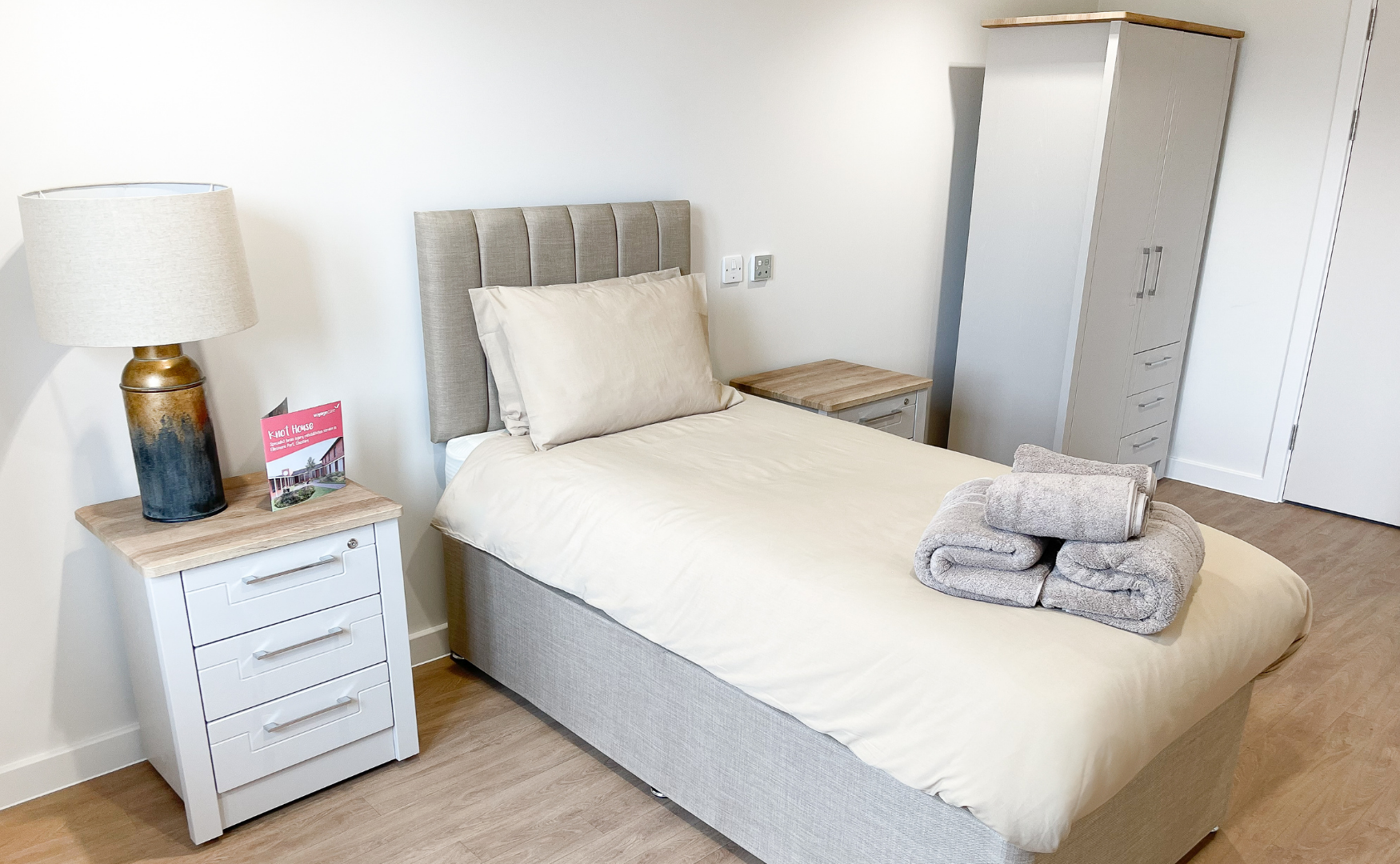
Thoughtful bedroom design is a key component of high-quality dementia care home interiors, where care home bedroom furniture plays an important role in creating a space that is safe, familiar and supportive. Selecting the right specialist care furniture can make a meaningful difference to daily life, promoting independence, comfort and emotional wellbeing.
Supports Resident Independence
Independence is essential for maintaining dignity and emotional wellbeing. Dementia-friendly furniture is specifically designed to help residents manage everyday tasks with greater confidence by enabling them to:
-
Easily see and identify their belongings.
-
Access wardrobes, drawers and storage without complex handles.
-
Move around the room safely without obstacles.
Simple design features — such as open-front wardrobes, clear panels or easy-access drawers — can make routine tasks more manageable and help residents sustain their independence for longer.
Improves Daily Routine & Reduces Stress
For individuals living with dementia, even simple daily tasks such as finding clothing, identifying personal items or remembering where belongings are stored can become overwhelming. This difficulty often leads to frustration, increased anxiety and a disrupted daily routine. Dementia-friendly bedroom furniture is specifically designed to minimise this cognitive strain by keeping essential items visible, incorporating predictable and easy-to-understand storage layouts, and avoiding features that require problem-solving or complex coordination.
By simplifying the environment and reducing unnecessary mental effort, residents are able to move through their daily activities with greater ease and confidence. This creates a smoother, more consistent routine and significantly lowers stress levels, helping individuals feel more settled, supported and in control within their personal space.
Enhances Safety & Reduces Accidents
Safety is a major priority in dementia care, and well-designed furniture plays a crucial role in minimising preventable risks. Dementia-friendly bedroom furniture improves safety by offering:
-
Rounded corners to reduce the likelihood of injury
-
Stable, anti-tip construction for enhanced security
-
Non-slip surfaces to support steadier movement
-
Minimal protruding elements that help prevent bumps or trips
By removing these common hazards, staff can dedicate more attention to meaningful care activities rather than constant supervision, ultimately creating a safer and more manageable environment for both residents and caregivers.
Helps Staff Provide Better Care
Dementia-friendly furniture not only benefits residents but also significantly supports care teams in delivering more efficient, compassionate and organised care. When furniture is intuitive, accessible and tailored to residents’ needs, it reduces the time carers spend searching for misplaced items or managing avoidable frustrations.
A well-organised room allows staff to assist residents more quickly, maintain cleaner spaces and reduce behavioural triggers caused by clutter or confusion. This thoughtful design approach leads to smoother daily routines, fewer interruptions, and a calmer working atmosphere — contributing to a more positive care culture and improving the overall quality of support provided within the home.
Creates a Calming, Comfortable Environment
A calm and comfortable bedroom environment is essential for residents with dementia, as visual overstimulation and unpredictable layouts can increase anxiety and restlessness. Dementia-friendly furniture helps establish a peaceful atmosphere by incorporating soft, muted colours, simple shapes and predictable design elements that reduce visual confusion.
These design choices help residents feel more grounded and secure, encouraging relaxation throughout the day. A calming bedroom also contributes to healthier sleep patterns, smoother routines and greater emotional stability. By prioritising comfort and clarity, care homes can create a space that genuinely supports wellbeing and helps residents feel more at ease in their daily surroundings.
Choosing the Right Dementia-Friendly Bedroom Furniture for Care Homes
Selecting the right bedroom furniture for residents with dementia requires a careful balance of safety, durability and everyday functionality. Furniture should be designed to make daily tasks as simple as possible, helping residents feel more confident and independent. Features such as open or transparent storage allow belongings to be easily visible, while handleless or easy-to-use designs minimise frustration and support self-reliance.
Visual clarity is also important. Contrasting colours help furniture stand out, making it easier for residents to identify and access what they need. Rounded edges and strong, stable construction reduce the risk of injury, while easy-clean finishes ensure the room remains hygienic and simple to maintain. Maintaining a consistent design throughout the bedroom further reduces confusion and creates a familiar, reassuring environment.
Ultimately, simplicity is key. The less effort a resident has to make in navigating their personal space, the more comfortable and secure they feel. At Swan Hill, we specialise in providing high-quality dementia-friendly bedroom furniture across the UK, helping care homes create safe, supportive and calming environments for their residents.
Final Thoughts
Dementia-friendly bedroom furniture is more than a design trend — it’s an essential part of creating safe, supportive and dignified living spaces in care homes. By choosing furniture that reduces confusion, enhances safety and promotes independence, care homes can significantly improve quality of life for residents while making day-to-day care easier for staff.
The right furniture doesn’t just change a room — it changes experiences, routines and overall wellbeing.
FAQ’s
Is dementia-friendly furniture more costly than standard options?
Not always. While some designs include specialist features, many cost about the same as standard care home furniture — especially when you factor in durability and lower maintenance needs.
How often should dementia-friendly furniture be reviewed or updated?
A review every 3–5 years is ideal. However, furniture should be replaced sooner if it becomes unstable, worn, or no longer suits residents’ needs.
Can this type of furniture be used for non-dementia residents?
Yes. The features support everyone — clear visibility, easy access and safe edges benefit all residents, regardless of cognitive ability.
What’s the most common mistake care homes make when choosing dementia furniture?
Choosing furniture based on appearance alone. The biggest mistake is ignoring practical features that reduce confusion, such as colour contrast, visibility, or simplified storage.
Do staff need special training to use dementia-friendly furniture effectively?
Not formal training, but basic awareness is crucial. Staff should understand how the furniture supports residents, how to maintain clear visibility, and how to keep storage organised.